

From the Field to the Cloud: How LoRaWAN Sensors Transform Environmental Monitoring
Long-range, low-power wireless sensors are making it practical to monitor environmental conditions across hundreds of acres — at a fraction of the cost of traditional solutions.
The Challenge: Monitoring Vast, Remote Areas
Environmental monitoring has historically required a painful tradeoff: coverage versus cost. You could install a handful of expensive, wired monitoring stations at key locations, or you could deploy hundreds of manual data loggers that require someone to physically visit each site to retrieve data. Neither approach gives you the real-time, high-density visibility that modern operations demand.
Agriculture operations need soil moisture data at dozens of points across hundreds of acres. Energy sites need continuous air quality and weather monitoring around perimeters. Construction projects need dust, noise, and vibration measurements at regulatory boundaries. Mining operations need groundwater level tracking across tailings areas.
The common thread: large areas, many measurement points, limited power infrastructure, and a need for real-time data. This is exactly the problem that LoRaWAN was designed to solve.
Why LoRaWAN: Range, Battery Life, and Scale
A single LoRaWAN gateway can cover a 10 km radius and support over 500 sensors simultaneously, with individual sensors running for up to 10 years on a single battery. This combination of range, density, and longevity is what makes LoRaWAN uniquely suited to environmental monitoring.
Compare this to cellular IoT, where each sensor requires a SIM card, a monthly data plan, and a battery that lasts 2–3 years at best. Or Wi-Fi, which requires proximity to access points and constant power. LoRaWAN operates in unlicensed spectrum with no recurring per-device connectivity fees. The economics change fundamentally when your per-sensor cost drops from $15/month to near zero.
Key LoRaWAN advantages for environmental monitoring:
- 10+ km range in rural, line-of-sight conditions (2–5 km in urban or obstructed environments)
- 5–10 year battery life for sensors transmitting every 15 minutes
- No per-device data fees — the gateway provides connectivity for all sensors in its coverage area
- Low cost per sensor — typically $50–150 per environmental sensor node
- Proven in harsh environments — IP66-rated sensors operate in rain, dust, extreme temperatures
The Powoflow LoRaWAN Stack
Powoflow covers the whole path from sensor to dashboard. A Powoflow Sense M2 receives sensor readings over LoRaWAN and sends them on over Ethernet, Wi-Fi or 4G. Where there is no power or network, Powoflow Sense Mesa does the same from a weatherproof enclosure on LTE, and also connects the equipment already there. We set both up for your account before they ship: you mount them and switch them on.
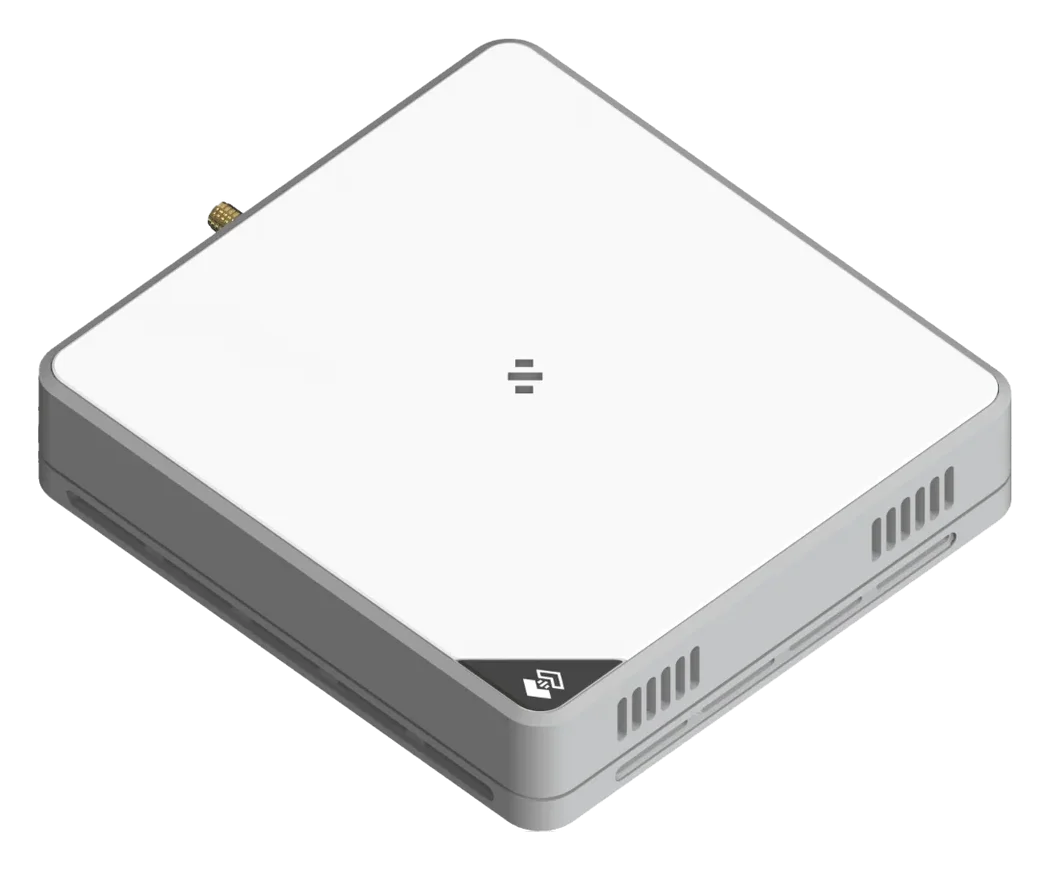
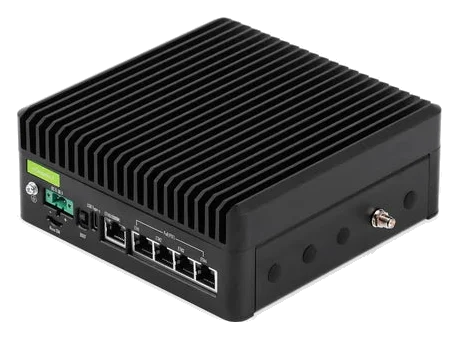
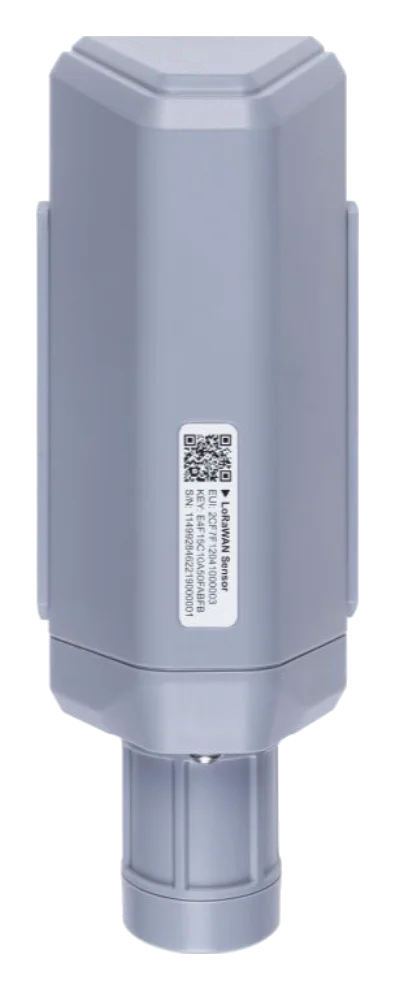
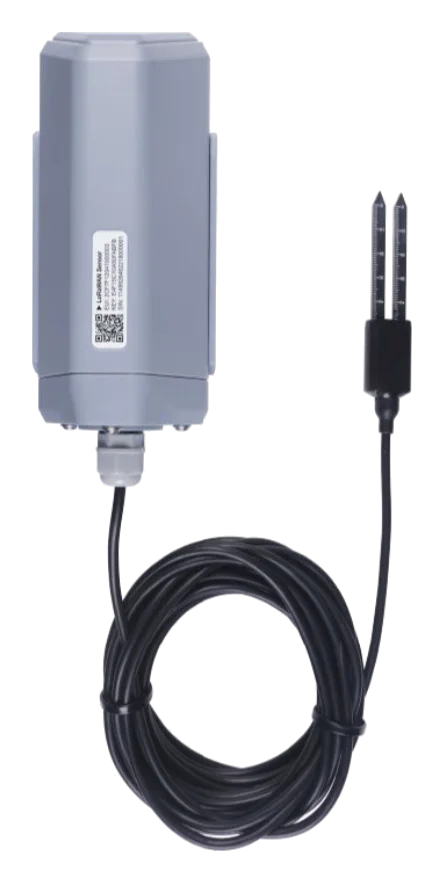
The Powoflow Sense sensors cover the most common environmental parameters: air temperature and humidity, CO2, light, soil moisture, temperature and conductivity, pH, and probe temperature. Each sensor is set up with the correct payload decoder, so readings arrive already parsed and in the right units.
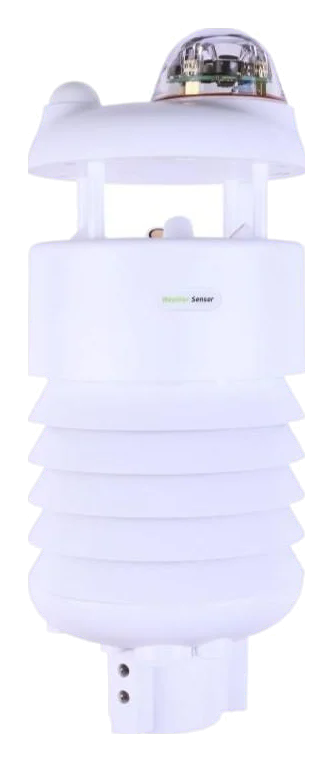
The S700 weather station adds a professional-grade meteorological package: wind speed and direction, rainfall, light, air temperature, humidity and pressure. For operations that need hyperlocal weather data — rather than relying on the nearest airport weather station 30 km away — a local station measures the conditions where the work happens.
Example: Covering a 500-Acre Farm
Here is how a 500-acre irrigated farm could be covered: one On-Premise Agent and about 48 soil sensors reporting every 15 minutes, in place of weekly manual sampling.
Soil moisture and temperature sensors would sit in a grid across the irrigated fields, each reporting every 15 minutes. A weather station at the farm headquarters adds local rainfall and wind.
In Powoflow, each sensor has its own charts, so the team can see how different fields respond to irrigation and rain, next to the local weather readings.
Alarms watch the conditions automatically. When soil moisture at a sensor drops below the limit set for it, the people responsible are alerted. When a sensor stops reporting, a silent-sensor alarm is raised so the device can be checked.
Cost Comparison: LoRaWAN vs. Cellular per Sensor
Over a five-year deployment, LoRaWAN usually costs far less per sensor than cellular alternatives. Here is an illustrative comparison for a 50-sensor environmental monitoring network, using round figures:
| Cost Factor | LoRaWAN | Cellular IoT |
|---|---|---|
| Gateway / connectivity | $1,200 (one-time) | $0 (SIM per device) |
| Per-sensor hardware | $80 | $150 |
| Monthly data cost (50 sensors) | $0 | $250 ($5/sensor) |
| Battery replacements (5 years) | 0 | 2 per sensor |
| 5-year total (50 sensors) | ~$5,200 | ~$22,500 |
Illustrative figures for a 50-sensor network.
The gap widens further at scale. Adding the 51st LoRaWAN sensor costs $80 for the hardware and nothing else. Adding the 51st cellular sensor costs $80 in hardware plus $300 in data fees over five years, plus the labor cost of battery replacements.
Scaling Up: One On-Premise Agent, Hundreds of Sensors
The LoRaWAN gateway supports over 500 sensors in a single deployment, with adaptive data rate management that optimises airtime for every device. This means a multi-site operation can achieve comprehensive environmental coverage with a remarkably small infrastructure footprint.
For very large sites or sites with challenging terrain, multiple gateways can provide overlapping coverage. Sensors automatically connect to the strongest available gateway, and the cloud backend handles deduplication when a transmission is received by more than one gateway.
The combination of low-cost sensors, long battery life, and minimal infrastructure makes LoRaWAN the clear choice for environmental monitoring at scale. Whether the application is precision agriculture, regulatory compliance, or operational safety, the data that was once too expensive to collect is now available in real time, continuously, across every acre of your operation.
Ready to see it in action?
Schedule a personalised demo to explore how LoRaWAN monitoring can work for your operation.
Start free